Transforming genomic and epidemiological data into actionable insights for infectious disease research and public health.

The Bioinformatics and Computational Research Unit at CERID provides computational infrastructure, analytical expertise, and data science support for genomic analysis, molecular epidemiology, pathogen surveillance, and evidence-based public health research.
The unit supports researchers, clinicians, public health professionals, and trainees in the management and analysis of large-scale biological, genomic, and epidemiological datasets, enabling the application of modern computational tools to emerging infectious disease challenges.
By integrating bioinformatics, biostatistics, computational biology, epidemiology, and research data management, CERID facilitates multidisciplinary research that informs outbreak response, surveillance systems, policy development, and scientific innovation.
Our computational environment is designed to support both routine analytical workflows and advanced collaborative research projects at institutional, national, and international levels.
CERID delivers integrated computational and analytical services for genomics, epidemiology, surveillance, and collaborative research.

Quality control, genome assembly, variant detection, annotation, and comparative genomic analysis.
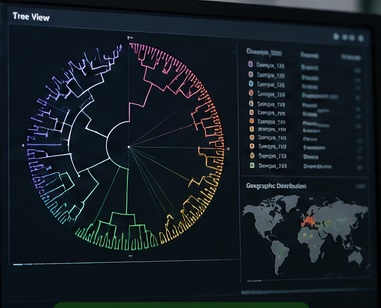
Reconstruction of transmission pathways, evolutionary relationships, and population dynamics.
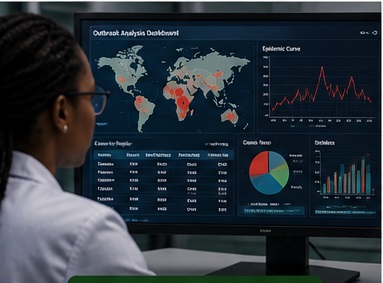
Statistical analysis, outbreak modeling, risk assessment, and surveillance analytics.

Secure organization, documentation, storage, sharing, and reproducibility of research data.

Computational workflows, cloud-based collaboration, and multi-institutional research support.
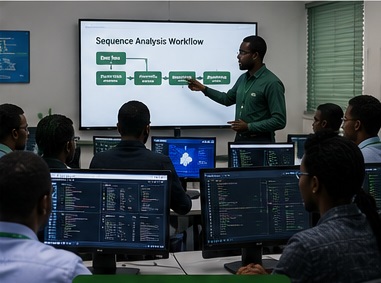
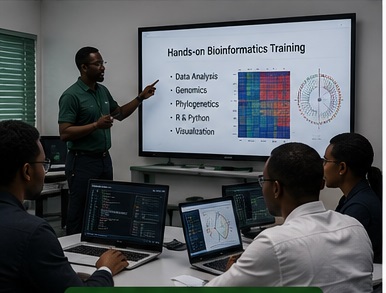
Hands-on bioinformatics, R, Python, genomics, and data science training programmes.
Scalable computing resources for large genomic datasets, phylogenomic analysis, and simulation studies.
Secure remote collaboration, data sharing, and reproducible research environments.
R, Python, SPSS, epidemiological packages, and advanced visualization workflows.
Version control, metadata standards, audit trails, and reproducible analytical pipelines.
Genome characterization of malaria parasites, viruses, bacteria, and other infectious agents.
Tracking pathogen spread and transmission networks during outbreaks and surveillance studies.
Detection and monitoring of resistance genes and genomic markers of AMR.
Integrating genomic and epidemiological data for rapid public health response.
Statistical and computational models for disease trends, burden, and intervention impact.
Converting complex datasets into insights that inform diagnostics, policy, and innovation.
CERID actively supports capacity building in bioinformatics, data science, and computational epidemiology through structured training and mentorship.
Sequencing, surveillance, and research datasets.
Cleaning, validation, and preprocessing workflows.
Genomics, statistics, modeling, and visualization.
Reports, publications, and public health decisions.
Partner with CERID for genomic analysis, phylogenetics, epidemiological modeling, data management, training, and collaborative computational research.
Contact the Bioinformatics Team